Production Sites
This page highlights production websites and tools that were built, launched, or supported using the design systems, CMS architecture, backend services, and platform infrastructure described throughout this portfolio.
Each site serves a distinct audience and organizational unit within Penn State, while sharing a common technical foundation: a modular design system, multi-tenant CMS architecture, federated APIs, automated deployment pipelines, and standardized analytics.
Together, these projects demonstrate how platform-level engineering decisions translated into real, high-traffic, long-lived digital products.
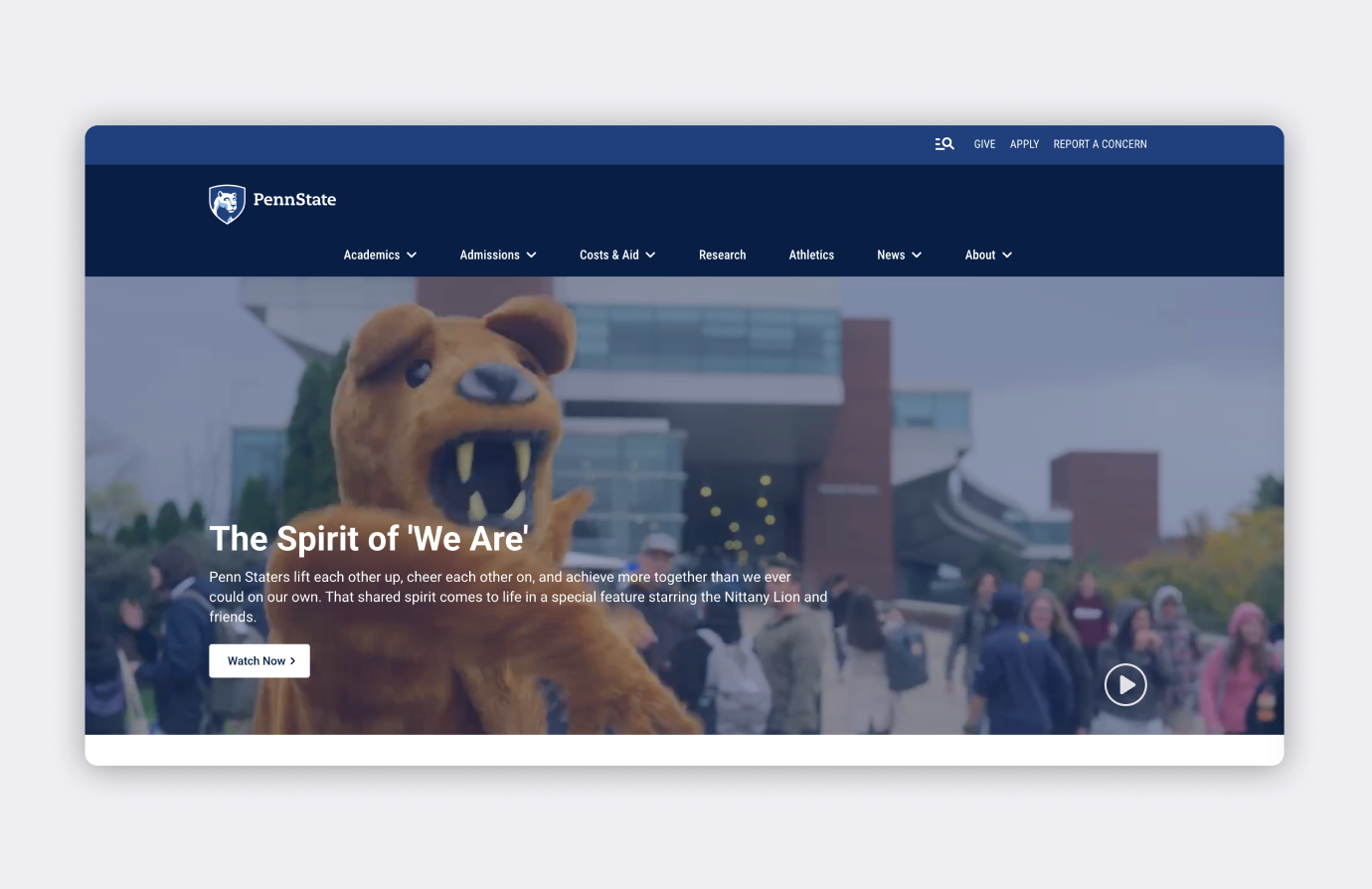
psu.edu
Penn State’s primary institutional website serves as the central digital presence for the university, supporting prospective students, faculty, staff, alumni, and the public.
Scope of work
Design system and component architecture
CMS modeling and authoring patterns
Platform and deployment infrastructure
Analytics integration and governance
Performance, accessibility, and reliability improvements
Role
Technical Architect, Platform engineering, CMS architecture, frontend systems, and operational tooling
Penn State News
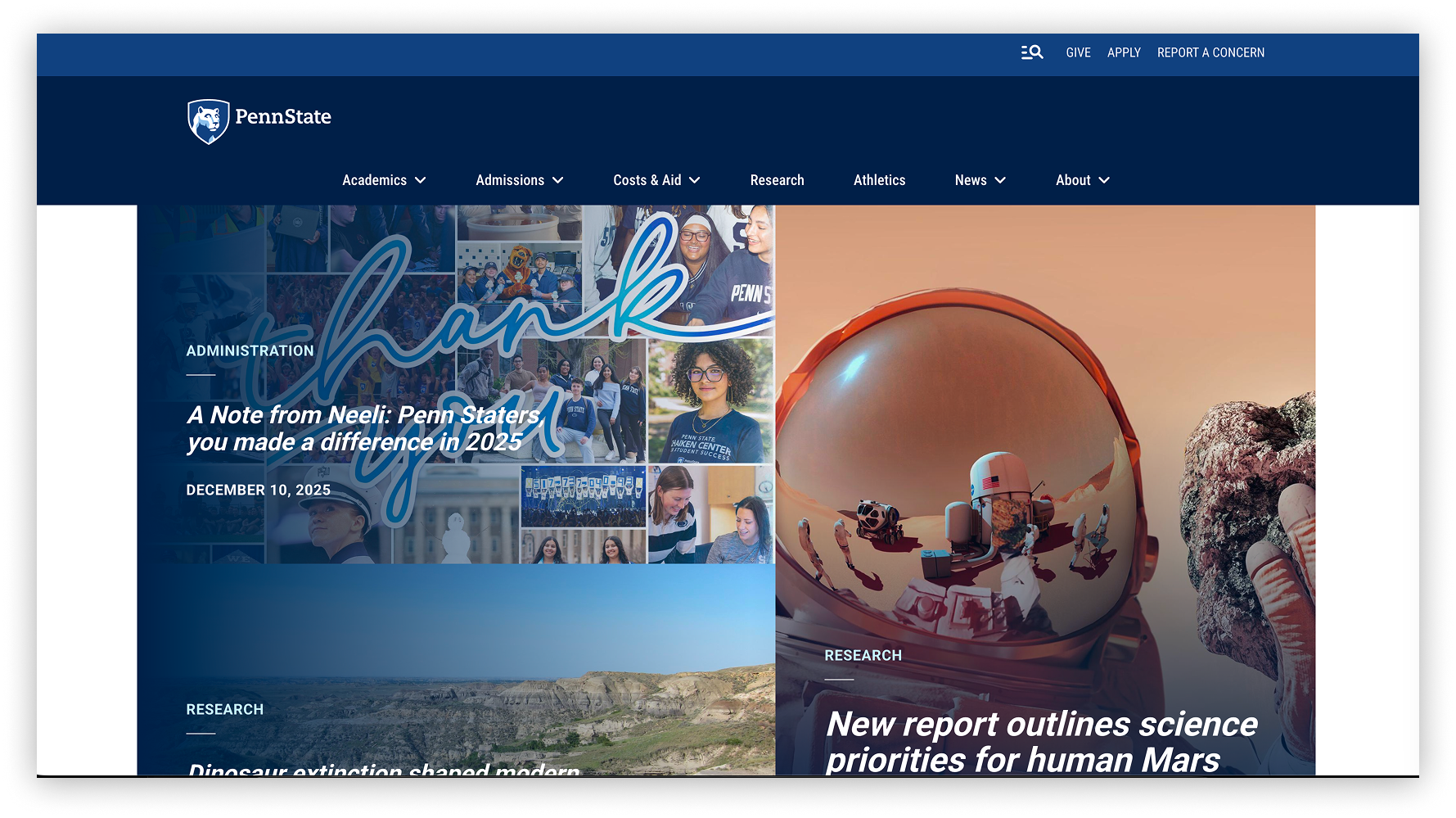
Penn State News delivers university-wide journalism, research announcements, and institutional storytelling at scale.
Scope of work
Editorial component development
Analytics patterns for content engagement
Role
Frontend architecture
College of Medicine
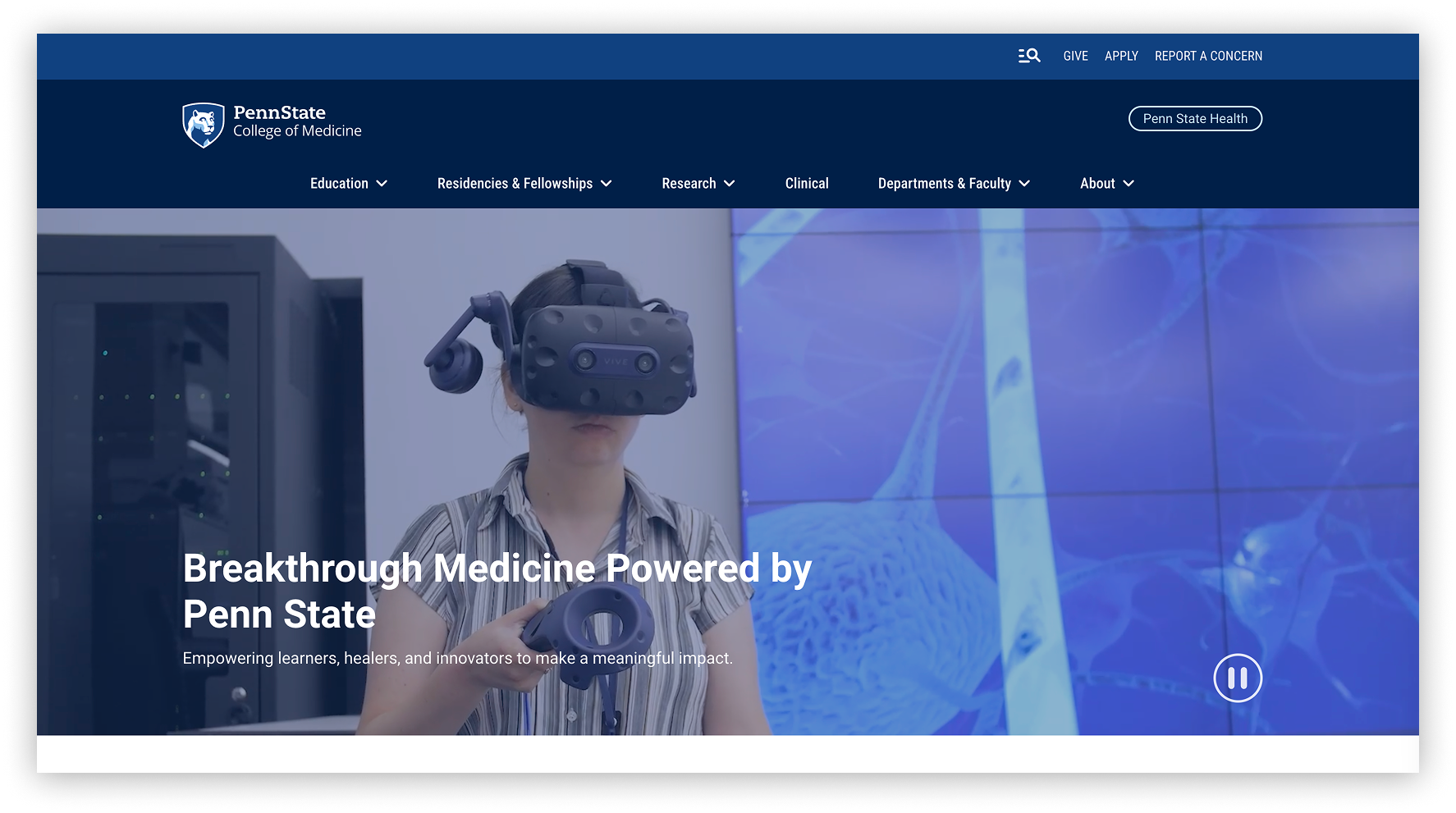
The College of Medicine site supports academic programs, research initiatives, clinical partnerships, and institutional communications for a large, complex organization.
Scope of work
Modular design system adoption
Content model standardization
Cross-site CMS integrations
Platform infrastructure and deployment workflows
Shared analytics and component tracking
Role
Technical Architect, Design systems, CMS architecture, platform engineering
CTSI (Clinical & Translational Science Institute)
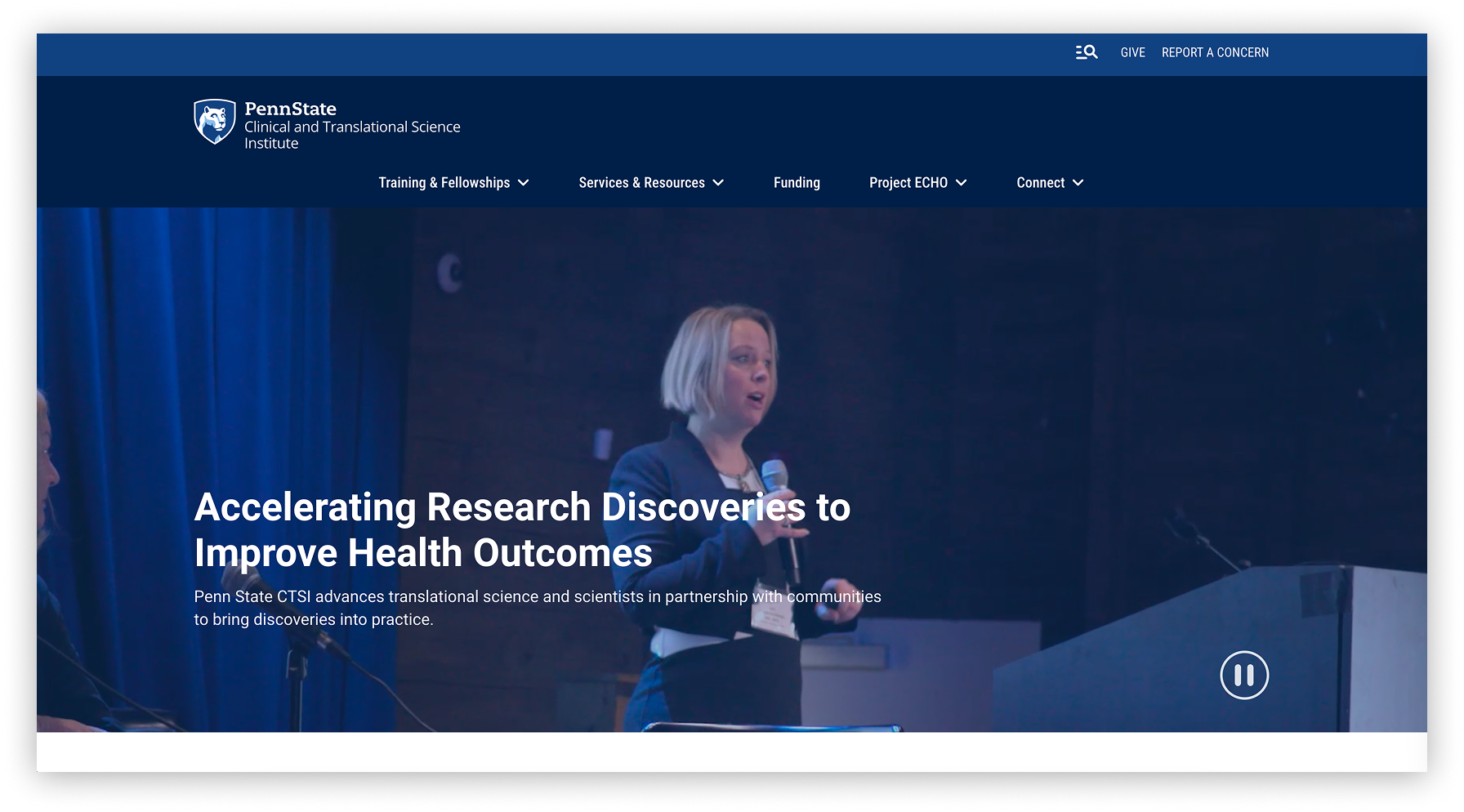
CTSI supports research collaboration, funding programs, and academic initiatives across Penn State and partner institutions.
Scope of work
Multi-tenant CMS architecture
Component-based page construction
Cross-space content reuse
Platform stability and environment management
Authoring experience improvements
Role
Technical Architect, CMS architecture, frontend systems, backend integrations
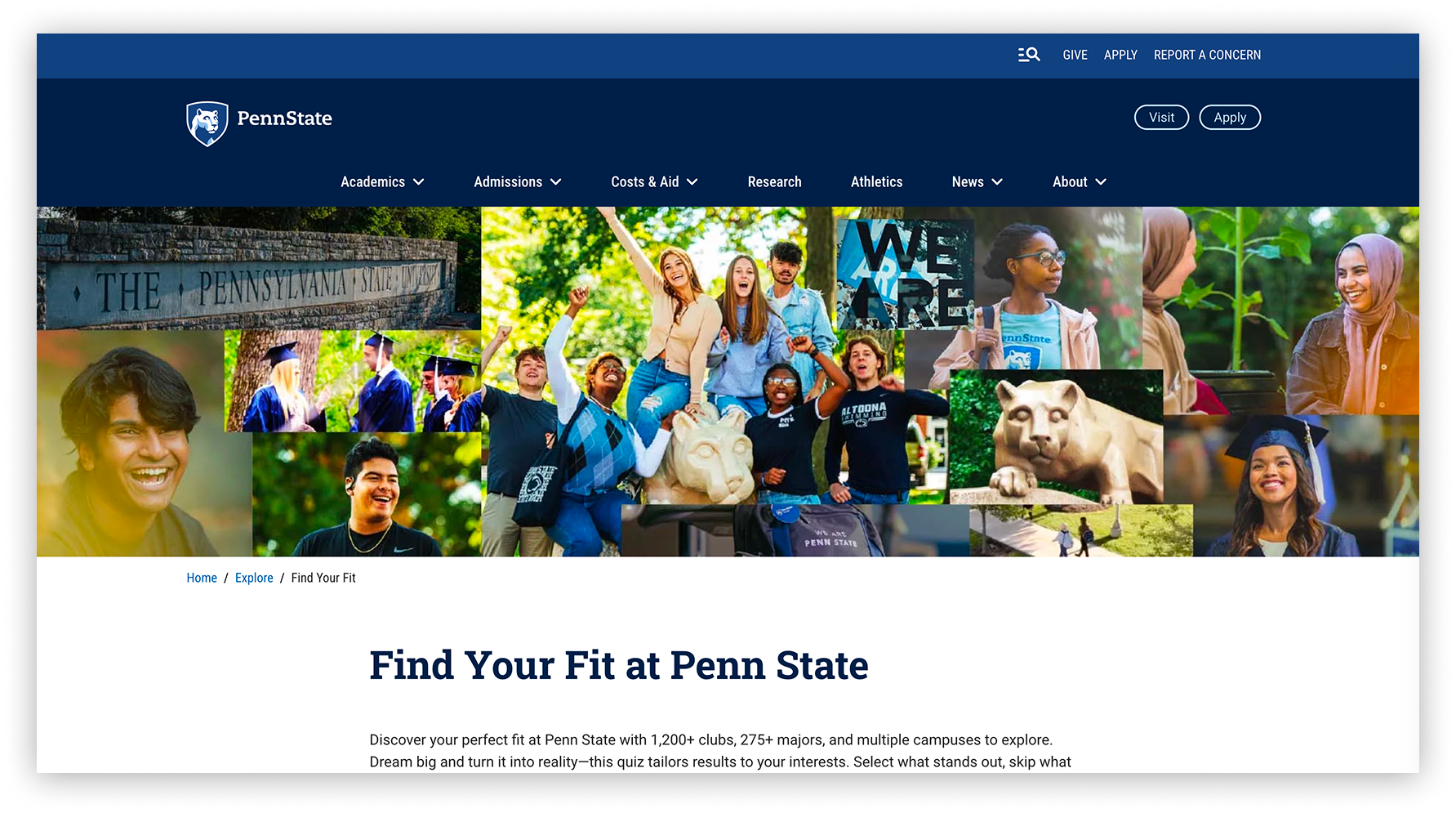
Find Your Fit Tool
An interactive tool designed to help prospective students explore academic programs and pathways across Penn State.
Scope of work
Custom frontend application development
Backend API integration
Form and conversion tracking
Analytics instrumentation
Platform deployment and testing workflows
Role
Technical Architect, Full-stack engineering, backend integration, analytics architecture
Shared Foundation Across All Sites
While each site serves a different audience and purpose, they are unified by a shared platform foundation:
A reusable design system and component library
Modular, multi-tenant CMS architecture
Federated APIs for shared content and data
Automated CI/CD pipelines and testing
Component-level analytics and governance
Standardized operating procedures for delivery
This approach allows teams to move faster without sacrificing consistency, reliability, or long-term maintainability.
Outcome
These sites collectively represent production implementations serving large audiences across academic, research, editorial, and enrollment contexts. They demonstrate how platform-level engineering can scale across organizations while still supporting the unique needs of individual teams and stakeholders.